MBAKS is warning members to be on heightened alert for increasingly sophisticated phishing and wire fraud scams targeting builders, developers, and permit applicants throughout our region.
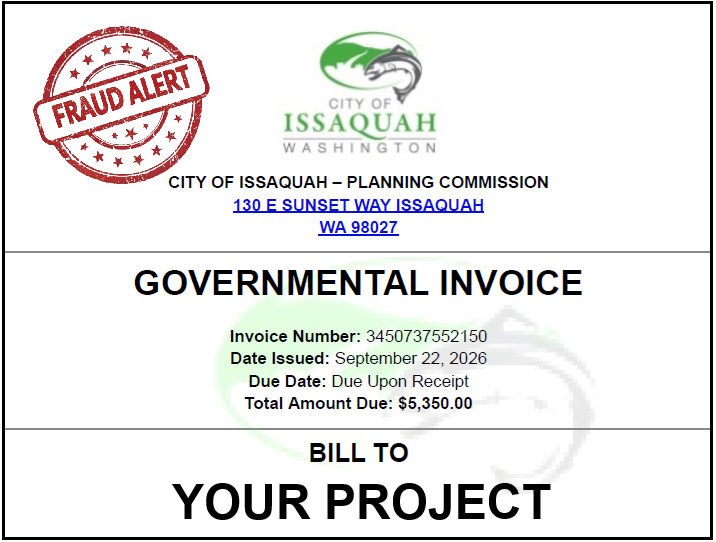
Recently, an MBAKS member received what appeared to be an official invoice from the City of Issaquah requesting payment related to an active development application. The correspondence included accurate project information and appeared legitimate at first
glance. Fortunately, the member paused before sending payment and was able to confirm with the city that the invoice was fraudulent. The incident was subsequently reported to the Washington State Attorney General's Office, the FBI's Internet Crime
Complaint Center (IC3), and the financial institution identified in the fraudulent wire instructions. These scams are becoming more convincing because perpetrators are using publicly available permit and land use information to impersonate local
government staff and departments. In many cases, the emails contain real project names, application numbers, addresses, and staff names.
These scams are becoming more convincing because perpetrators are using publicly available permit and land use information to impersonate local government staff and departments. In many cases, the emails contain real project
names, application numbers, addresses, and staff names.
Red Flags to Watch For
- Requests to wire money for permit, review, or application fees.
- Emails originating from addresses that look official but use non-government domains.
- Invoices sent from departments that do not normally handle billing, such as commissions, boards, or other unexpected divisions.
- Messages creating urgency and demanding immediate payment.
- Requests to communicate only by email regarding payment instructions.
Before You Pay Any Invoice
If you receive an unexpected or questionable invoice:
- Do not send payment immediately.
- Verify the request directly with the jurisdiction using official phone numbers, email addresses published on the agency's website, or by visiting the office in person.
- Do not simply reply to the email. Fraudsters can spoof email addresses or create convincing lookalike accounts that appear to belong to legitimate government staff.
- Carefully inspect the sender's full email address, not just the display name.
A good rule of thumb: any request to wire funds should be treated as a significant red flag. When in doubt, independently verify.
Reporting Fraud
If you receive a suspected fraudulent invoice or phishing attempt, consider reporting it to:
As the Washington State Attorney General's Office notes, the most effective tool against scams is awareness. These schemes continue to evolve, and scammers often succeed because they exploit trust, urgency, and familiarity.
Please share this warning with your teams, project managers, permit coordinators, and accounting staff. A few minutes spent verifying a payment request can prevent a costly loss.